
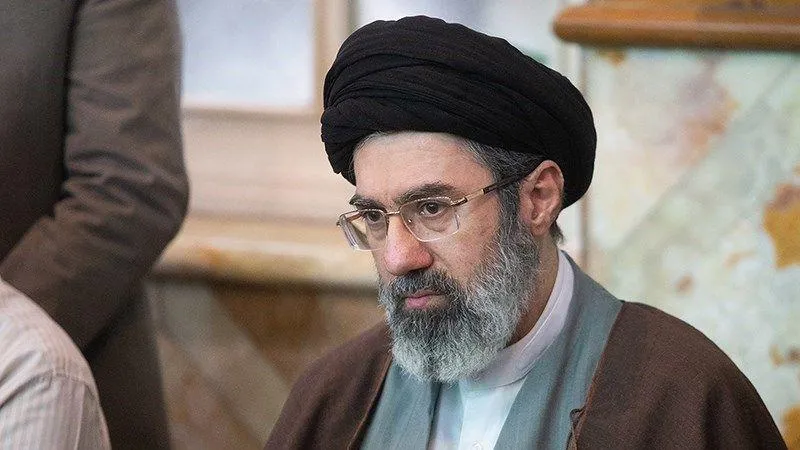
Who Is Mojtaba Khamenei? Iran’s New Supreme Leader Explained
Mojtaba Hosseini Khamenei has emerged as one of the most significant figures in Iranian politics in 2026 after being named the new Supreme Leader of Iran. His rise to the top of the country’s theocratic political system has drawn global attention, especially amid escalating conflict in the Middle East that has drawn in both the United States and Israel.
Early Life and Family Background
Mojtaba Khamenei was born on September 8, 1969, in Mashhad, a major religious city in northeastern Iran. He is a member of the influential Khamenei family and the second son of the late Ayatollah Ali Khamenei, who served as Iran’s Supreme Leader for nearly four decades. Mojtaba’s mother was Mansoureh Khojasteh Bagherzadeh, and he grew up in a family deeply embedded in Iran’s political and religious elite.
While much of Mojtaba’s early life was spent in religious study and living under his father’s growing power, he also experienced wartime Iran, serving briefly in military duty during the Iran‑Iraq War in the 1980s. He later studied Islamic theology and taught at seminaries in Qom, one of the most important centers for Shia clerical education. :contentReference[oaicite:1]{index=1}
Role Behind the Scenes Before Becoming Leader
Unlike many political leaders, Mojtaba never held an elected government position or a widely recognized public office in Iran before 2026. Instead, much of his influence came from his family name and placement within networks of power. Analysts describe him as a powerful “behind‑the‑scenes” figure who often acted as a gatekeeper within his father’s office, managing access to Ali Khamenei and building strong ties to Iran’s powerful Islamic Revolutionary Guard Corps (IRGC) and security institutions.
Over the years, Mojtaba was seen by many observers as someone who wielded considerable influence, particularly in hardline conservative circles. He was believed to have played a role in political events such as the controversial 2005 and 2009 presidential elections. During the 2009 Green Movement protests — sparked by disputed election results — he supported the government’s suppression of demonstrators.
Despite his influence, critics argued that Mojtaba lacked the formal religious credentials traditionally expected of Iran’s supreme leader. In the Shia clerical hierarchy, the title “Ayatollah” is typically reserved for the most learned and respected jurists, but Mojtaba’s clerical rank before 2026 was considered lower than that of many senior clerics.
The Death of Ali Khamenei and Succession
The most dramatic turn in Mojtaba’s life occurred in early 2026. On February 28, joint strikes by the United States and Israel targeted Iran’s leadership as part of a widening war in the region, killing Ayatollah Ali Khamenei along with numerous high‑ranking Iranian officials. The attacks marked a critical escalation in the conflict and left Iran’s leadership vacuum open at a crucial moment. Just days later, on March 8, Iran’s Assembly of Experts, an 88‑member clerical body responsible for selecting the country’s supreme leader, convened to choose a successor. In an unprecedented development since the Islamic Republic was established in 1979, Mojtaba Khamenei was elected as the third supreme leader of Iran, marking the first father-to-son leadership transition in the country’s modern history.
Why His Appointment Matters
Mojtaba’s selection has profound implications for both Iran’s domestic politics and the broader geopolitical landscape. His close ties with the IRGC and conservative factions mean that Iran’s leadership is likely to adopt a more hardline stance, especially in foreign policy and military affairs. This shift comes at a time when tensions with the U.S., Israel, and regional rivals are already extremely high.
International reactions have been mixed. U.S. leaders have criticized Mojtaba’s rise, with former President Donald Trump calling his appointment “unacceptable,” arguing that the U.S. should have a say in Iran’s future leadership. Meanwhile, inside Iran, officials have pledged loyalty and unity behind the new supreme leader amid ongoing hostilities
Personal Loss and Political Continuity
The war that claimed his father’s life also brought personal tragedy for Mojtaba. Reports suggest that members of his own family, including his wife and possibly one child, were killed in the same strikes that killed Ali Khamenei, although exact details remain less publicly confirmed.
Now at the helm of Iran’s theocratic system, Mojtaba represents continuity of his father’s conservative ideology but also a consolidation of power that many analysts believe will strengthen the role of military and security institutions in Iranian governance. Whether this will lead to an escalation or a shift in strategy in the ongoing Iran conflict remains a key question for international observers.
What Comes Next
As Supreme Leader, Mojtaba Khamenei holds immense authority over Iran’s government, military, and religious institutions. His leadership will heavily influence how Iran navigates its external conflicts, relations with global powers, and internal political dynamics in the months and years ahead.
For now, world leaders continue to monitor developments closely, with the U.S., Israel, and regional neighbors watching how Iran’s new leadership shapes policy, particularly in a conflict that shows no signs of easing.
Related Tags
mojtaba khamenei, iranian supreme leader, iran new leader, mojtaba, iran new supreme leader,
Mojtaba Khamenei's children, Mojtaba Khamenei wife, Mojtaba Khamenei net worth, Mojtaba Khamenei son,
Mojtaba khamenei father, Mojtaba khamenei reddit, Mojtaba Khamenei News, Trump on mojtaba khamenei
Post a Comment